

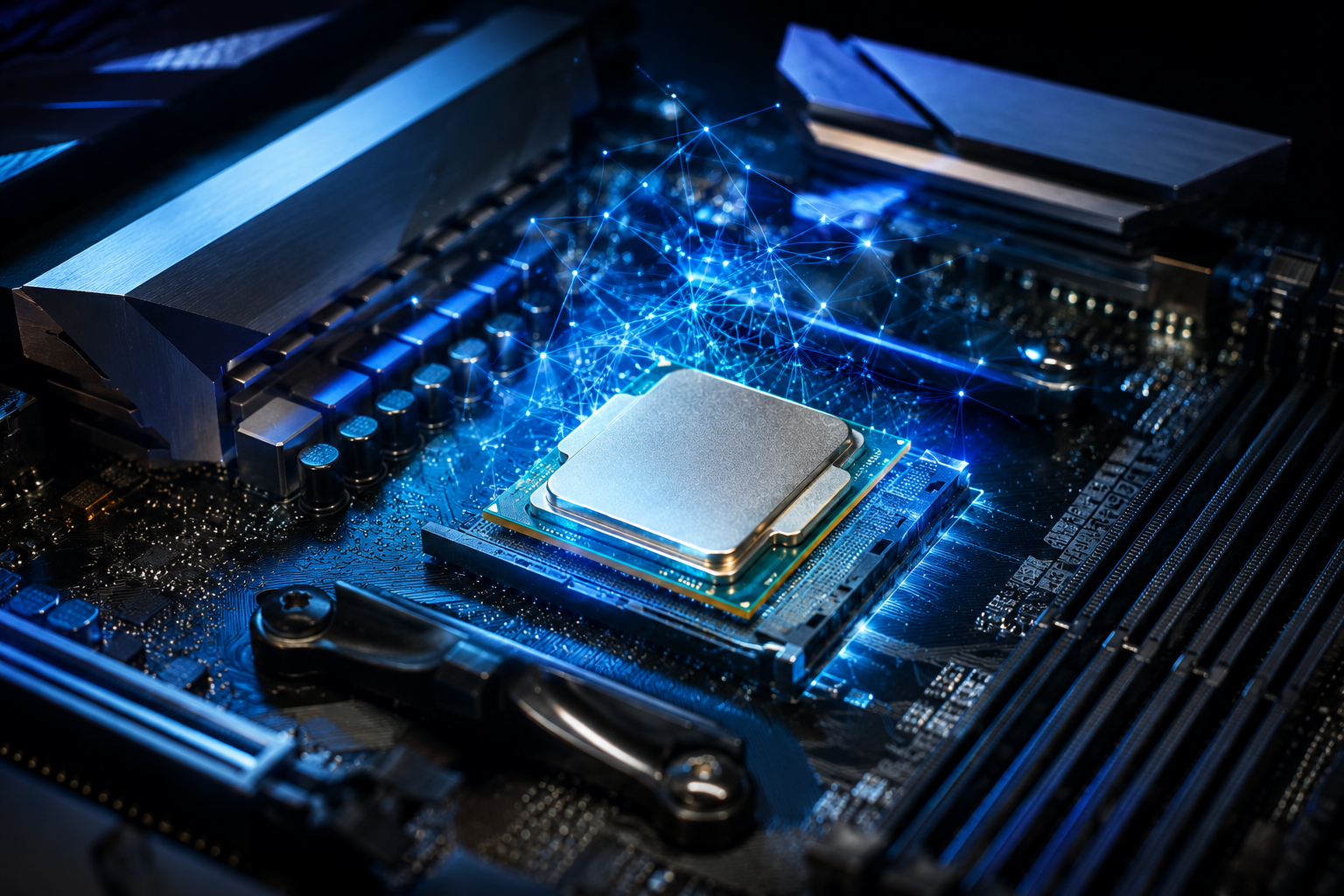
AMD Zen 6 CPUs are already becoming one of the most talked-about pieces of upcoming hardware in the PC industry. Although AMD has not officially revealed all details about its next-generation Ryzen lineup, industry reports and leaks suggest that the company is preparing significant changes that could reshape the desktop processor market.
The biggest story is not simply about more cores or faster clock speeds. Instead, it is about artificial intelligence. According to recent reports, AMD’s upcoming Olympic Ridge processors may place a much greater emphasis on AI acceleration through an upgraded Neural Processing Unit (NPU), potentially redefining what users expect from a modern desktop CPU.
As AI-powered applications continue expanding across productivity, content creation, and everyday computing, AMD appears ready to adapt its processor design to meet future demands.
What Is AMD Olympic Ridge?
Olympic Ridge is the reported codename for AMD’s future desktop processors based on the Zen 6 architecture. These chips are expected to succeed the current Ryzen desktop family while continuing support for the popular AM5 platform.
Although AMD has not publicly confirmed every specification, multiple reports suggest that Zen 6 will introduce notable architectural improvements designed to increase performance, efficiency, and AI capabilities.
Expected improvements include:
- Higher CPU performance
- Expanded core counts
- Improved efficiency
- Enhanced cache structures
- Stronger AI acceleration
These upgrades could make Olympic Ridge one of AMD’s most ambitious desktop processor launches in years.
AI Is Becoming a Core Part of Modern PCs
Artificial intelligence is rapidly becoming one of the most important aspects of computing.
Applications powered by AI are now appearing in productivity software, image editing tools, video creation platforms, operating systems, and even everyday workplace applications.
Traditional processors can perform AI tasks, but dedicated AI hardware allows those workloads to run more efficiently while consuming less power.
Future AI-powered systems could benefit from:
- Faster content generation
- Better voice processing
- Real-time translations
- Advanced image enhancement
- Smarter productivity tools
As AI becomes more deeply integrated into daily workflows, processor manufacturers are increasingly focusing on specialized AI hardware.
The Rumored NPU Upgrade: AMD Zen 6 CPUs
One of the most significant reports surrounding AMD Zen 6 CPUs involves a stronger integrated Neural Processing Unit.
Current AMD processors already feature AI-focused hardware in certain product categories, but future desktop chips could take this much further.
If AMD expands its NPU capabilities, users may experience noticeable improvements in AI-powered applications and workflows.
Potential benefits include:
- Faster local AI processing
- Better software optimization
- Enhanced content creation
- Improved machine learning workloads
- Reduced dependence on cloud-based AI services
This would position AMD to compete more effectively in a market increasingly focused on AI-enabled computing.
A Shift Away From Integrated Graphics?
Perhaps the most surprising rumor suggests AMD could prioritize AI hardware over integrated graphics resources.
Desktop enthusiasts frequently use dedicated graphics cards, meaning integrated graphics are often less important for high-performance users. As a result, AMD may choose to dedicate additional silicon space toward AI acceleration rather than expanding onboard graphics capabilities.
If true, this approach could deliver:
- Larger AI engines
- Better efficiency
- Stronger AI performance
- More future-ready desktop processors
While AMD has not officially confirmed this strategy, the possibility highlights how seriously the company appears to be taking AI development.
Higher Core Counts Are Expected: AMD Zen 6 CPUs
Beyond AI enhancements, Zen 6 is expected to bring substantial increases in core counts across the Ryzen desktop lineup.
Reports suggest AMD could introduce a broader range of configurations, potentially offering processors with:
- 6 cores
- 8 cores
- 10 cores
- 12 cores
- 16 cores
- 20 cores
- 24 cores
This expanded lineup would give consumers more flexibility when selecting a processor based on their workload requirements and budget.
For creators, professionals, and power users, higher core counts could significantly improve multitasking and productivity performance.
New 12-Core Chiplet Design: AMD Zen 6 CPUs
AMD’s chiplet strategy has played a major role in its recent success, and Zen 6 appears ready to push that concept even further.
Industry reports indicate that each Zen 6 Core Complex Die (CCD) could contain up to 12 cores, allowing AMD to build higher-core-count processors more efficiently.
Benefits of this approach may include:
- Better scalability
- Increased performance density
- Greater product flexibility
- Improved manufacturing efficiency
Dual-chiplet configurations could reportedly enable desktop processors with as many as 24 cores and 48 threads, offering tremendous computational power for demanding workloads.
Continued Support for the AM5 Platform: AMD Zen 6 CPUs
One piece of news likely to please AMD enthusiasts is continued support for the AM5 platform.
According to current reports, Olympic Ridge processors are expected to remain compatible with AM5 motherboards.
This approach provides several advantages:
- Easier upgrades
- Lower overall costs
- Extended motherboard lifespan
- Better long-term value
AMD’s commitment to longer platform support has been one of its strongest selling points, and Zen 6 appears ready to continue that tradition.
What Gamers Can Expect: AMD Zen 6 CPUs
Gaming remains a critical market for Ryzen processors.
Although AI capabilities are receiving considerable attention, gaming performance will still be a top priority for buyers. Improvements to architecture, core design, and cache systems could help boost gaming performance alongside productivity workloads.
Potential gaming benefits may include:
- Better frame rates
- Improved responsiveness
- Faster background processing
- Enhanced multitasking
- Future AI-assisted gaming features
Most gaming enthusiasts already rely on dedicated graphics cards, making the reported shift toward AI hardware less concerning for this audience.
AI PCs Could Become the New Standard: AMD Zen 6 CPUs
The PC industry is rapidly moving toward AI-focused computing.
Software developers increasingly optimize applications for AI acceleration, and hardware manufacturers are responding by integrating specialized AI engines into their products.
Zen 6 could play a significant role in this transition by offering dedicated AI resources directly within the desktop processor.
Future applications may include:
- Intelligent personal assistants
- Advanced productivity software
- Automated content creation
- Real-time language translation
- Personalized computing experiences
These developments suggest that AI could soon become as important as traditional CPU performance.
When Could Zen 6 Launch?
Although excitement continues to grow, AMD has not officially announced a release date for Olympic Ridge processors.
Earlier reports suggested a possible 2026 launch, while more recent information points toward a release window in 2027.
Until AMD confirms its roadmap, all specifications and timelines should be treated as expectations rather than final details.
However, interest in Zen 6 continues building because of the potentially transformative nature of these changes.
Final Thoughts
AMD Zen 6 CPUs could represent one of the most significant architectural shifts in AMD’s history. While improvements in core counts and overall performance are exciting, the company’s apparent focus on artificial intelligence may be the real headline.
With reports suggesting stronger NPU hardware, expanded processor configurations, continued AM5 support, and a redesigned chiplet structure, Olympic Ridge has the potential to reshape the desktop CPU market. The growing importance of AI-powered applications makes these developments particularly relevant for future PC users.
Although official details remain limited, one thing is becoming increasingly clear: the future of desktop computing is moving toward AI integration. If AMD successfully combines powerful traditional processing with advanced AI acceleration, Zen 6 could become one of the most important Ryzen generations ever released.
Read Other Interesting news here: NewsRaze Review 2026
