

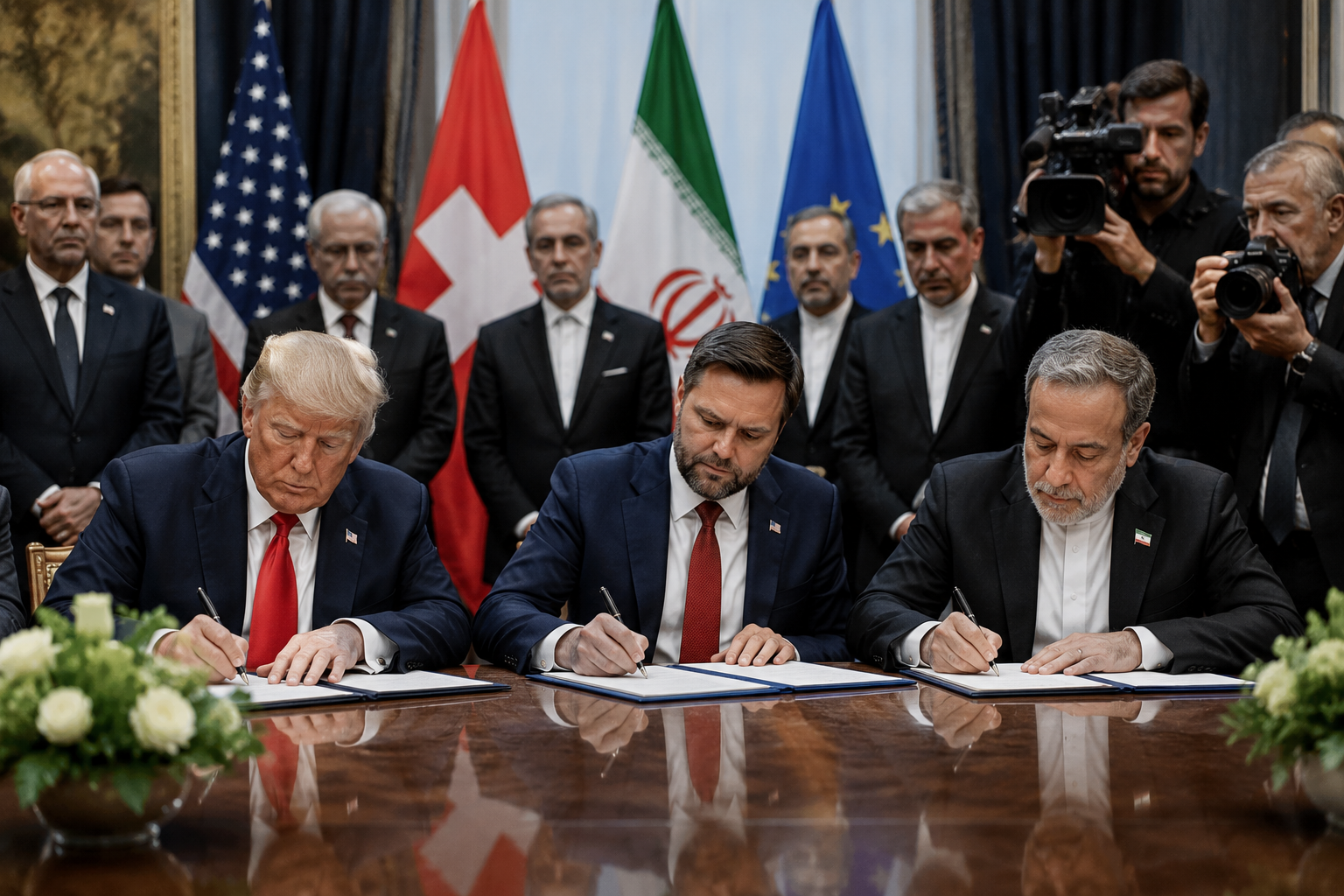
The Iran Peace Deal has become one of the most significant international developments of 2026. After months of conflict, diplomatic negotiations, military tensions, and economic uncertainty, a new memorandum of understanding (MoU) between the United States and Iran is moving forward.
According to recent updates, US President Donald Trump stated that the agreement was signed electronically by American and Iranian representatives, marking a major step toward ending a conflict that has affected the Middle East and global markets for months. The announcement has generated cautious optimism worldwide while also raising questions about implementation, regional security, and the future of diplomatic relations.
While supporters view the agreement as an opportunity to reduce tensions, critics remain concerned about unresolved issues and the long-term effectiveness of the deal.
How the Agreement Reached This Stage: Iran Peace Deal
The road to the current agreement was far from simple.
Over recent months, multiple rounds of negotiations took place through international mediators. Reports indicated that both sides gradually moved closer to a framework that could halt hostilities and create conditions for future talks.
Earlier updates suggested that negotiators were finalizing the text of an agreement while discussing issues such as regional stability, sanctions, maritime security, and future diplomatic engagement. The latest developments indicate that the memorandum has now been signed electronically ahead of a formal ceremony expected later this week.
Electronic Signing Marks a Historic Step: Iran Peace Deal
One of the most talked-about aspects of the agreement is the method used to finalize it.
According to officials, Donald Trump, JD Vance, and Mohammad Bagher Qalibaf, Speaker of Iran’s Parliament, signed the memorandum electronically before a planned public signing ceremony. This digital signing represents an important procedural step that signals both parties have agreed to the framework.
Although the full text has not yet been released publicly, officials have confirmed that the agreement establishes a foundation for future negotiations and conflict reduction.
Strait of Hormuz Reopening Takes Center Stage: Iran Peace Deal
One of the most important parts of the agreement involves the Strait of Hormuz.
The waterway is among the world’s most critical energy routes, carrying significant volumes of oil and natural gas. Any disruption in the region has immediate consequences for global energy markets.
Reports indicate that the memorandum supports the reopening of the Strait following months of restrictions and military tensions. Officials have stated that maritime traffic is already beginning to increase, although full normalization may take time.
The reopening could help stabilize shipping routes and reduce uncertainty for international markets.
Nuclear Discussions Remain a Key Issue: Iran Peace Deal
Despite progress, nuclear concerns remain central to future negotiations.
Officials have suggested that the current memorandum serves as a framework rather than a final resolution of all disputes. Future discussions are expected to focus heavily on Iran’s nuclear activities and inspection arrangements.
Statements from US officials indicate that international inspectors may return as part of the broader diplomatic process. However, many details regarding implementation, verification, and compliance remain under discussion.
Because of these unresolved questions, many observers consider the current agreement only the first stage of a much larger diplomatic effort.
Regional Reactions Are Mixed: Iran Peace Deal
Not everyone is celebrating the agreement.
Some regional leaders have welcomed efforts to reduce hostilities and restore stability. Others remain skeptical, arguing that important security concerns have not yet been fully addressed.
Reports indicate that criticism has emerged within Israel, where some officials and political figures have questioned certain aspects of the agreement. At the same time, discussions continue regarding military activities in Lebanon and other neighboring areas.
These differing reactions highlight the complex political environment surrounding the deal.
Economic Implications Could Be Significant: Iran Peace Deal
Financial markets have closely monitored every development in the negotiations.
The prospect of reduced tensions has already influenced energy markets and investor sentiment. Analysts believe that improved stability in the Gulf region could help normalize trade routes and reduce some of the uncertainty that has affected global commerce.
Potential economic impacts include:
- Increased maritime traffic
- Improved energy market stability
- Greater investor confidence
- Reduced shipping disruptions
- Expanded opportunities for future trade
However, many economic benefits will depend on successful implementation and continued diplomatic progress.
Challenges Still Lie Ahead: Iran Peace Deal
Although the agreement represents progress, major challenges remain.
Several important questions still need answers, including:
- How future inspections will operate
- The timeline for implementation
- Conditions tied to sanctions relief
- Verification mechanisms
- Long-term regional security arrangements
Experts note that the memorandum creates a pathway forward but does not immediately resolve every issue. The coming weeks may prove critical in determining whether the agreement evolves into a lasting diplomatic breakthrough.
Why the World Is Watching Closely: Iran Peace Deal
The significance of the agreement extends far beyond the United States and Iran.
The Middle East remains one of the world’s most strategically important regions. Developments involving energy security, maritime routes, and regional stability affect governments, businesses, and consumers worldwide.
A successful implementation could:
- Reduce geopolitical tensions
- Improve regional security
- Stabilize energy markets
- Encourage further diplomacy
- Lower the risk of future escalation
Because of these potential outcomes, global leaders continue monitoring developments closely.
What Happens Next? Iran Peace Deal
The next phase will focus on transforming the memorandum into practical actions.
Officials have indicated that a formal signing ceremony is expected in Switzerland, while negotiators continue discussing implementation details. The release of the full agreement text may also provide greater clarity regarding obligations and expectations for both sides.
Observers expect intense diplomatic activity over the coming days as stakeholders seek to ensure the agreement remains on track.
Final Thoughts
The Iran Peace Deal represents one of the most important diplomatic developments of 2026. The electronic signing of the memorandum by key American and Iranian figures signals a willingness to pursue a path away from conflict and toward negotiation.
While major questions remain unanswered, the agreement offers a framework for future discussions on regional security, maritime access, economic stability, and nuclear issues. The reopening of the Strait of Hormuz, the prospect of renewed inspections, and the possibility of reduced tensions have already drawn global attention.
As more details emerge and formal ceremonies take place, the world will be watching closely to see whether this agreement becomes a lasting turning point in Middle Eastern diplomacy or merely the first step in a much longer process.
Read Other Interesting news here: Refurbished Mac
